Striated Caracara
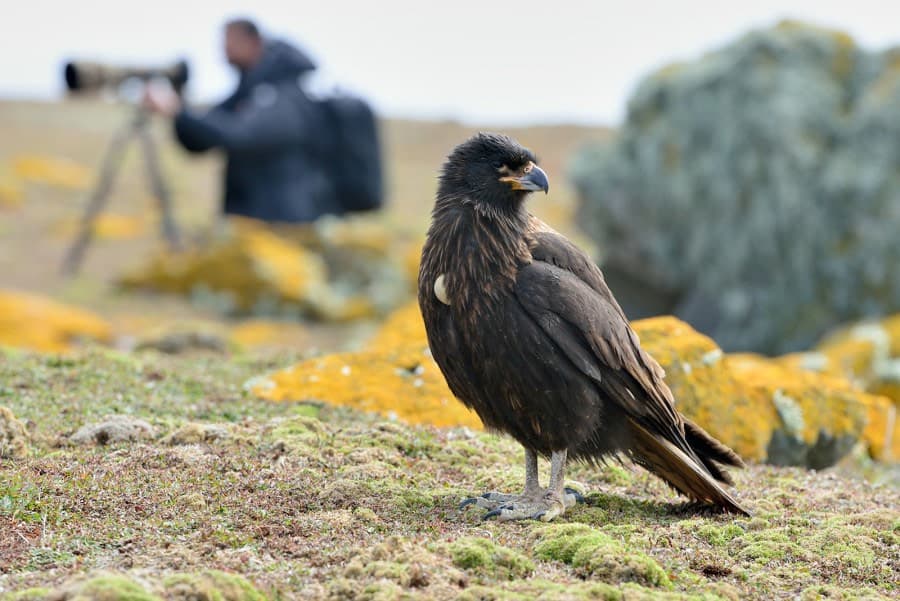
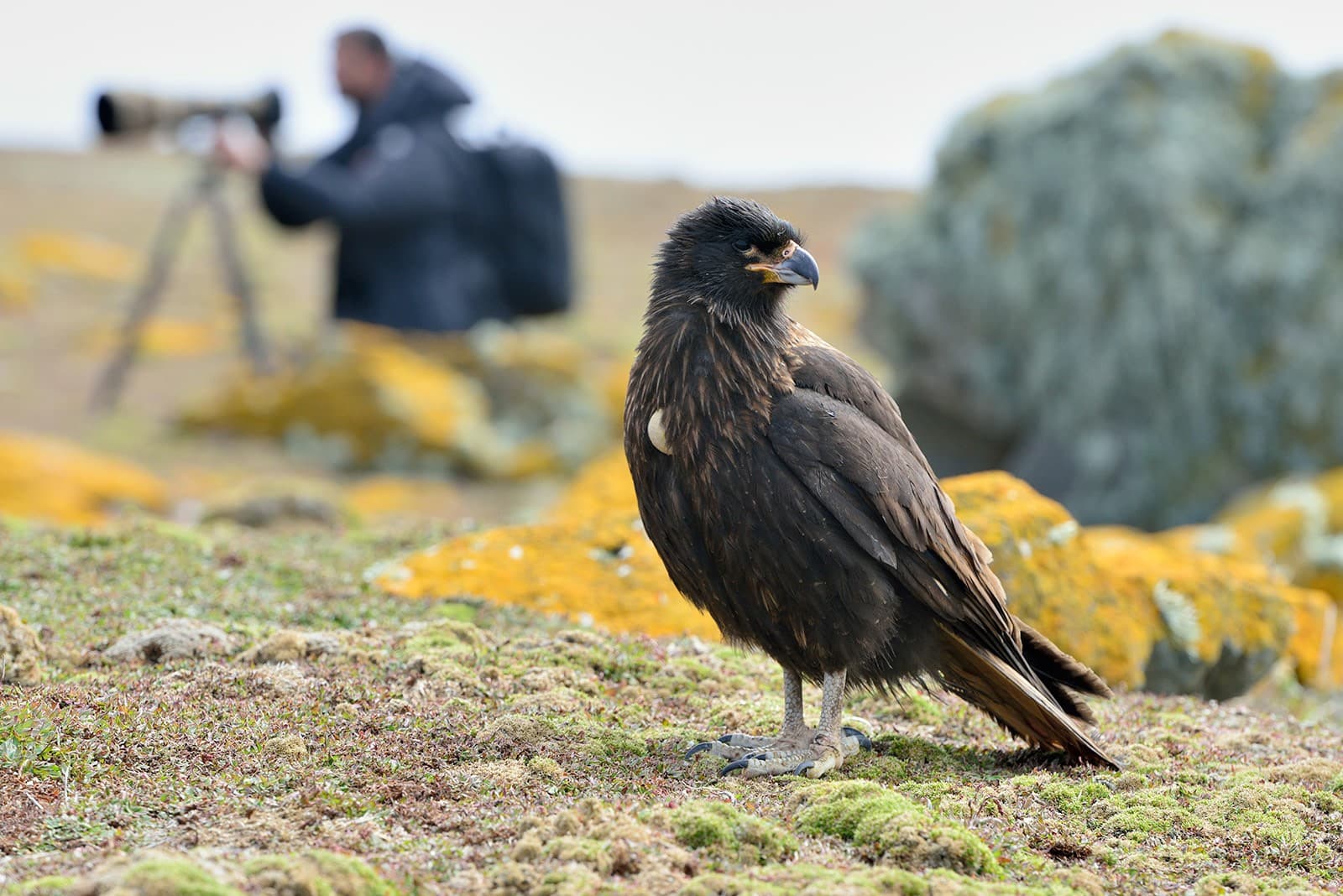
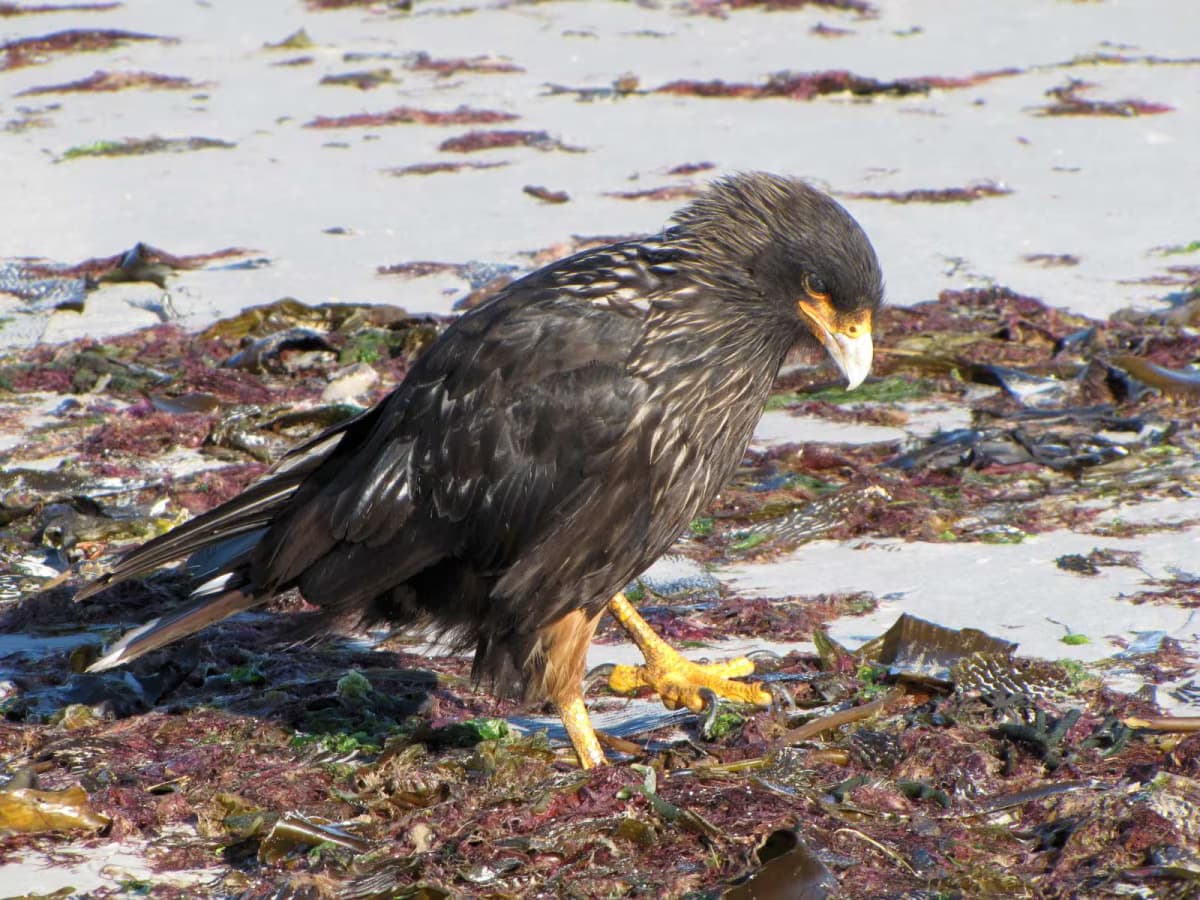
Eagle-like, dark brown plumage, grey-yellow legs and talons. White tips around neck, back of head, and tips of tail feathers. Yellow patches around bottom of eye and rear of beak. Hooked grey bill.
Oceanwide Expeditions
April 12, 2026
How do Striated Caracaras feed?
Are Striated Caracaras social?
How fast do Striated Caracaras move?

What are Striated Caracara birthing rituals like?
How long do Striated Caracaras live?
How many Striated Caracaras are there today?
Do Striated Caracaras have any natural predators?
7 Superb Striated Caracara Facts
These "Johnny Rooks" have a penchant for stealing red objects, and prefer to settle on islands populated by seals and seabirds in Tierra del Fuego and the Falklands

Name: Striated Carcara, Johnny Rook, Caracara Austral, Matamico Estriado, Matamico Grande, Tiuque Cordillerano Austral. (Phalcoboenus australis)
Location: Falklands, Tierra del Fuego.

Conservation status: Near Threatened.
Diet: Carrion, offal, food scraps, insects, worms, lambs, small seabirds, eggs and young of larger seabirds.

Appearance: Eagle-like, dark brown plumage, grey-yellow legs and talons. White tips around neck, back of head, and tips of tail feathers. Yellow patches around bottom of eye and rear of beak. Hooked grey bill.
Striated Caracaras are opportunistic – they’ll feed on almost anything they can. They’ll eat the young and eggs of seabirds, and hunt smaller seabirds in their burrows or on the wing. They will investigate human refuse for food and will eat offal. They will scavenge carcasses. They’re also known for overturning rocks for food which is a sign of higher intelligence in birds – it’s a form of adaptation and problem-solving.
Striated Caracaras may hunt together in flocks numbering up to 50 individuals.
Striated Caracaras are fast fliers and can reach speeds in excess of 60 km per hour.

Striated Caracaras build their nests on the ground or on cliff edges. The nests are built of twigs and vegetation, which is thin lined with wool or grass. The breeding season occurs from December through the end of February. The female lays up to four eggs. Incubation takes about a month. The births are timed to coincide with the birthing season of prey seabirds. This gives the parents easy access to food for their young, and for the young themselves once they leave the nest. The juveniles’ coverage is brown at first and will take up to 5 years to reach its adult colouring.
It’s not known how long Striated Caracaras live in the wild but those raised in captivity can live more than 30 years.

There are approximately 500 breeding pairs of Striated Caracaras found in the Falklands. Overall there may be up to 2500 mature individuals, or up to 4,000 individuals in total.
Striated Caracaras do not have any significant natural predators. The biggest threat they have faced is from sheep farmers who began an intensive effort to exterminate them from the Falklands in 1908. Thankfully this decision was reversed in the 1920s, though the population has still not fully recovered to its former levels.
Curated by Gvoya
Looking for the right voyage?
Browse upcoming departures from Oceanwide Expeditions and find the right itinerary.
Browse Oceanwide Expeditions VoyagesSource: oceanwide-expeditions.com