Thick-billed Murre
They may expend a great deal of energy in flight, but that hardly concerns these tightly nesting (though largest-living) members of the Alcidae family.
Oceanwide Expeditions
April 12, 2026

How do Thick-billed Murres feed?
Are Thick-billed Murres social?

How fast do Thick-billed Murres fly?
What are Thick-billed Murre birthing rituals like?

How long do Thick-billed Murres live?
How many Thick-billed Murres are there today?
Do Thick-billed Murres have any natural predators?

7 Bountiful Thick-billed Murre Facts
They may expend a great deal of energy in flight, but that hardly concerns these tightly nesting (though largest-living) members of the Alcidae family
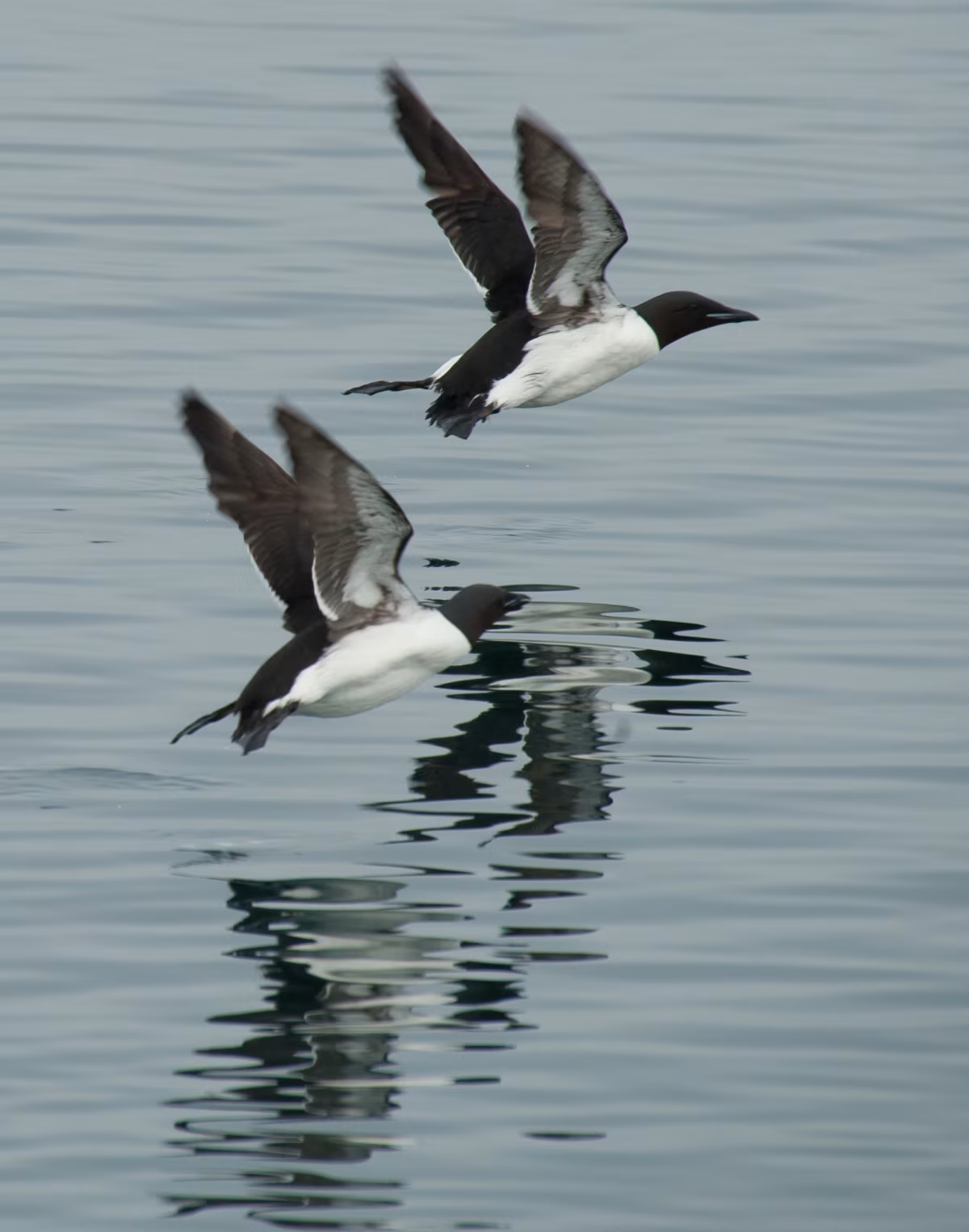
Name: Thick-billed Murre, Brünnich’s Guillemot (Uria lomvia)
Weight: 730 to 1,500 g (Pacific race larger than Atlantic race).

Location: Polar and sub-polar regions of northern hemisphere.
Conservation status: Least Concern.
Diet: Fish, mollusks, crustaceans, marine worms.

Appearance: Black head, back, neck, and wings. White underparts. Long and pointed bill. White stripe horizontally along the bill.
Thick-billed Murres are strong divers, able to reach depths of 150 metres and stay underwater for upwards of 4 minutes per dive. The average dive is between 20 and 40 metres.

Thick-billed Murres often venture a long distance from their homes to find foraging – sometimes as far as 100 km away.
Thick-billed Murres form tightly-packed colonies during their breeding season.

Thick-billed Murres can reach speeds of 80 km per hour. However because of their short wings they are not very maneuverable and it takes considerable effort for them to take off.
Thick-billed Murres form immense breeding colonies along cliff edges, the numbers sometimes reaching into the millions. They arrive at their nesting sites in spring but the actual egg-laying does not begin until around the beginning of June.
The “nests” are located on ledges and along steep cliffs. The nests themselves are not really nests – the eggs are laid on the bare rock.

One egg is laid. Both parents take turns incubating the egg (about a month) and raising the hatchling. Since the Thick-billed Murres require a tremendous amount of energy to take off into flight the parents are usually only able to feed the chick with one bit of food at a time.
Chicks are ready to leave the cliffs after three-quarters to one full month. They leave home by simply jumping off the cliff to plummet to the waters below. The male will stay together with the chick at sea another two or so months to teach the young how to fend for itself.

Thick-billed Murres live about 20 years in the wild.
Worldwide estimates place the Thick-billed Murre population at anywhere between 15 million and 20 million individuals.
Thick-billed Murre chicks and eggs can be preyed upon by Glaucous Gulls, Arctic Foxes, and Common Ravens.
Curated by Gvoya
Looking for the right voyage?
Browse upcoming departures from Oceanwide Expeditions and find the right itinerary.
Browse Oceanwide Expeditions VoyagesSource: oceanwide-expeditions.com