The best time to visit the Galapagos Islands: a month-by-month guide
There’s no single best month to visit the Galapagos Islands — there’s a best month for you, depending on whether you care more about calm seas, marine wildlife activity, or dodging crowds to pick the Best time to visit Galapagos. December through May brings warmer water and calmer seas; June through

Galaxy Cruises
September 22, 2026
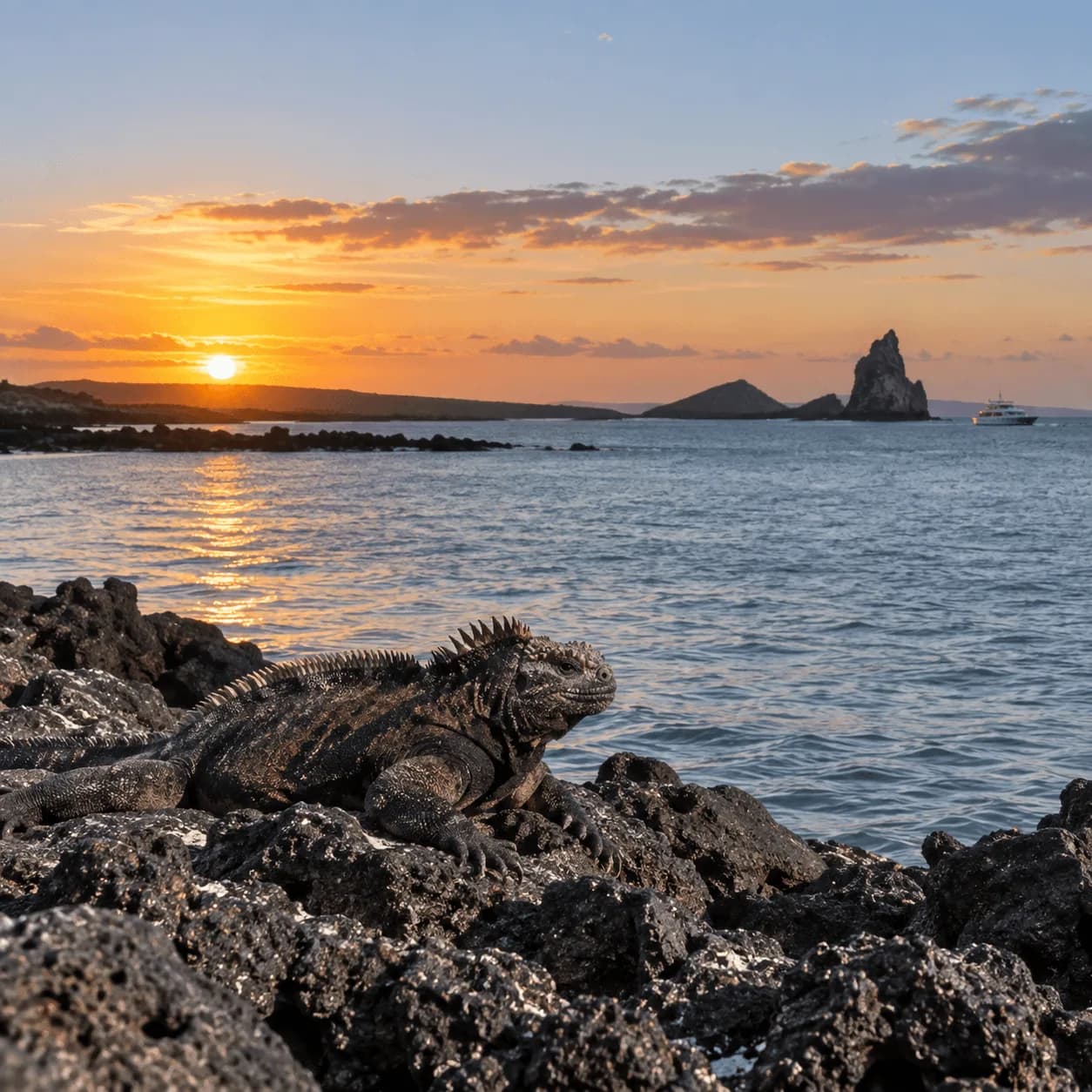
There’s no single best month to visit the Galapagos Islands — there’s a best month for you, depending on whether you care more about calm seas, marine wildlife activity, or dodging crowds to pick the Best time to visit Galapagos. December through May brings warmer water and calmer seas; June through November brings cooler water, choppier crossings, and the richest marine wildlife of the year, including whale sharks and the best odds of hammerhead sightings.
Both seasons deliver world-class wildlife encounters — this guide breaks down the weather month by month, when specific animals are most active, how crowds and prices shift through the year, and which season fits your travel style best.
The two Galapagos seasons: warm and cool
The Galapagos doesn’t follow a typical four-season calendar — it has two, driven by ocean currents rather than latitude. The warm season runs roughly December through May; the cool, “garúa” season runs June through November. This seasonal rhythm is shaped by ocean currents and climate patterns such as El Niño and La Niña.
Warm, wet season (December–May)
The warm season brings air temperatures in the upper 70s to mid-80s°F (25–30°C), short tropical downpours followed by sunshine, and the calmest, warmest sea conditions of the year — ideal for first-time visitors, families, and anyone prone to seasickness.
Rain typically falls in brief afternoon showers rather than all-day storms, and skies clear quickly. Water temperatures climb to a comfortable 75–82°F (24–28°C) by February and March, and the ocean surface is at its calmest, making inter-island navigation smoother aboard small expedition ships.
Cool, dry “garúa” season (June–November)
The cool season is named for the “garúa” — a persistent, misty drizzle driven by the Humboldt Current — and it’s when the Galapagos truly comes alive underwater: nutrient-rich upwelling draws in whale sharks, larger fish schools, and the best odds of seeing hammerhead sharks all season.
Air temperatures drop to a mild 64–75°F (18–24°C), skies stay overcast more often than not, and the sea gets choppier — expect a bumpier ride between islands and water temperatures as low as 64°F (18°C) by August and September. It’s a trade-off: less classic “postcard sunshine,” but the single best window for serious wildlife and underwater encounters.
Galapagos weather and temperature by month
Weather in the Galapagos shifts gradually rather than switching overnight between seasons — here’s the month-by-month breakdown of air temperature, sea temperature, and rainfall.
For details on what these numbers mean specifically for time in the water, see our guide to Galapagos snorkeling, which covers water temperature and visibility applied to that activity.
December–January
December and January mark the start of the warm season: seas calm down noticeably, rain arrives in short afternoon bursts, and giant tortoise eggs begin hatching, a run that continues into April. It’s also peak holiday season, so book well ahead if traveling around Christmas or New Year.
February–March
February and March are the warmest, wettest months of the year, with the clearest, calmest water for swimming and underwater photography.
April–May
April and May sit at the tail end of the warm season, with waved albatross arriving on Española in large numbers and beginning courtship, and sea turtle and marine iguana hatchlings emerging across the islands.
June–July
June marks the shift into the cool season: the Humboldt Current arrives, water temperatures start dropping, and humpback whales and whale sharks begin showing up. July brings peak seabird nesting activity, especially blue-footed boobies and flightless cormorants.
August–September
August and September have the coldest water of the year — as low as 64°F (18°C) — and the richest marine productivity, along with the start of Galapagos sea lion pupping season. September is also, reliably, the quietest month of the year for tourism.
October–November
October and November bring calmer seas than the peak of the cool season, making for some of the best underwater visibility of the year, alongside playful young sea lion pups and the last of the blue-footed booby chicks fledging.
Best time to visit the Galapagos for wildlife
There’s no bad month for wildlife in the Galapagos — most species are visible year-round — but several signature encounters are tied tightly to a specific window, and timing your trip around one of these is the single best way to make sure you see it.
Waved albatross and seabird courtship season
Waved albatross are only in the Galapagos from roughly April through December, nesting almost exclusively on Española Island — visit January through March and you won’t see them at all, since the entire population is out at sea. Courtship displays peak in April and May, right after the first arrivals.
Giant tortoise nesting and hatching season
Giant tortoises migrate to the highlands to nest around June and July, then their eggs begin hatching from December through April — visit the highlands of Santa Cruz or Isabela in this window for the best odds of spotting hatchlings.
Sea lion pupping season
Galapagos sea lion pups are born from roughly August through December, peaking in September and October — this is when beaches like Isla Lobos and Gardner Bay are at their most playful and photogenic, with curious pups approaching swimmers and snorkelers.
Galapagos penguin season
Galapagos penguins are present year-round around Isabela and Bartolomé, but they’re most active in the water during the cool season, roughly June through September, when nutrient-rich currents keep them hunting close to shore — see our guide to Galapagos snorkeling for the best spots to swim alongside them.

Galapagos high season vs. low season: crowds, prices, and booking timing
Galapagos high season runs mid-December through early January and July through August, when prices peak and popular itineraries book out furthest in advance; low season falls in April–May and September–October, with fewer visitors and, often, better last-minute availability.
High season (expensive, crowded): mid-December–early January (holidays) and July–August (northern hemisphere summer break). Christmas and New Year’s are the single busiest, most expensive stretch of the year — book 6–12 months ahead if you’re set on those dates.
Low season / shoulder months (better value, fewer people): April–May and September–October. September is consistently the quietest month of the year for tourism, while still falling in the richer wildlife-viewing window.
One advantage of traveling aboard a small expedition ship rather than a large cruise vessel: itineraries like those aboard Galaxy Stella, or the catamaran Galaxy Alya carry a fraction of the guests of a large vessel, so even in high season you’re not sharing a landing site with a crowd — the Galapagos National Park caps group sizes at every visitor site regardless of season, and a smaller ship simply means a smaller group at any given moment.
Best time to visit the Galapagos by travel style
The “best” time to visit really depends on what you’re optimizing for — here’s how that breaks down by traveler type.
Best time for families and first-time visitors
December through May is the easiest window for families and first-time visitors: warmer water, calmer seas, and less chance of a rough crossing between islands make it the most comfortable introduction to the Galapagos for kids and anyone new to boat travel.
Best time for snorkeling and diving
Snorkeling and diving each have their own seasonal sweet spot — see our full breakdown in Galapagos snorkeling for water temperature and visibility applied specifically to snorkeling, and Galapagos liveaboard diving for the dedicated dive season around Darwin and Wolf Islands, rather than repeating that detail here.
Best time to visit Galapagos to avoid seasickness
The calmest sea conditions fall between January and May, when swells are lowest across the archipelago — but the boat itself matters as much as the calendar. Smaller, purpose-built expedition vessels like EcoGalaxy and Galaxy Skape are inherently more stable in a swell than a large cruise ship, which is why many guests prone to seasickness feel noticeably better aboard a small yacht even during the choppier cool season months.
Best time for wildlife photography
June through November delivers the most dramatic wildlife behavior for photographers — courting seabirds, nursing sea lion pups, and dense marine life — while February and March offer the clearest light and calmest water for underwater photography specifically.
Is there a bad time to visit the Galapagos?
No — there’s no genuinely bad time to visit the Galapagos, since wildlife is present year-round and the islands have no true off-season for tourism. The closest thing to a “worst” time is subjective: travelers who get seasick easily may want to avoid the choppier cool-season crossings (June–November), while sun-and-swimming purists may find the overcast garúa skies less appealing than the warm season’s sunshine.
Is it a good time to visit the Galapagos this month? Quick verdict by month
Short answer: almost every month works — here’s a fast, one-line verdict for each one if you’re deciding between specific dates.
Plan your Galapagos trip
Whichever season you choose, the Galapagos delivers world-class wildlife encounters year-round — the real question was never “when is the best time,” but what kind of trip you want once you’re there. The ship matters just as much as the calendar: Galaxy Cruises‘ small expedition yachts put you closer to the wildlife, with fewer guests sharing each landing site, whatever month you pick.
Ready to lock in your dates? Explore our fleet and book a Galapagos expedition cruise to build an itinerary around the season, wildlife, and pace that matter most to you.
Frequently asked questions about the best time to visit the Galapagos
What is the best time to visit the Galapagos Islands?
December through May offers the calmest seas and warmest water, while June through November brings cooler water and the richest marine wildlife activity of the year. Neither is objectively “better” — it depends on your priorities.
What is the worst time to visit the Galapagos?
There isn’t really a worst time — every month has wildlife and good weather is never far off. If anything, travelers prone to seasickness may want to avoid the choppier cool-season months of June through November.
Is there a best and worst time to visit the Galapagos, or does it just depend?
It genuinely depends on what you want to see and do. Sun and calm water point to December–May; rich marine wildlife and cooler diving conditions point to June–November — both are excellent, just different trips.
What is the best month to visit the Galapagos?
There’s no single best month, but March offers some of the warmest water and calmest seas, while September combines cooler-season wildlife activity with the fewest crowds of the year.
When is Galapagos high season?
High season runs mid-December through early January and July through August, when prices peak and popular cruises and yachts book out furthest in advance.
When is Galapagos low season, and is it cheaper?
Low season falls in April–May and September–October. Availability is generally better and last-minute deals more common, though prices vary by operator and itinerary.
What is the water temperature in the Galapagos by month?
Water temperature ranges from around 64°F (18°C) in August and September, the coldest months, up to 78–80°F (26–27°C) in February and March, the warmest.
Does it rain a lot in the Galapagos?
Rain is heaviest from January through April, usually as short, intense afternoon showers rather than all-day rain, and skies clear quickly. June through November stays largely dry, with overcast garúa skies rather than rainfall.
What is the best time to visit the Galapagos for wildlife?
June through November is generally best for marine wildlife activity, including whale sharks and hammerhead sharks, while several land species — waved albatross, giant tortoise hatchlings, sea lion pups — each have their own narrower peak window covered above.
When can you see waved albatross in the Galapagos?
Waved albatross are present on Española Island roughly April through December, with courtship displays peaking in April and May. They’re absent entirely from January through March.
When is the best time to see giant tortoises in the Galapagos?
Giant tortoises are visible year-round in the highlands, but egg-hatching season runs December through April, giving you the best odds of spotting hatchlings alongside adults.
Is the Galapagos good for families and kids?
Yes, especially December through May, when calmer seas and warmer water make boat travel and swimming more comfortable for children and first-time cruisers.
What’s the best time to avoid seasickness in the Galapagos?
January through May has the calmest sea conditions overall, but choosing a smaller, more stable expedition ship matters just as much as the season — smaller vessels handle swells noticeably better than larger ones.
Do I need to fly through Quito to reach the Galapagos?
Most international flights to the Galapagos connect through mainland Ecuador, typically Quito or Guayaquil, before continuing on to Baltra or San Cristóbal airport — build a day or two of buffer time into your itinerary in case of connection delays.
Can I combine a Galapagos cruise with a visit to Quito or Peru?
Yes — select Galapagos and Ecuador/Peru extension itineraries build in a pre- or post-cruise visit to Quito or elsewhere in Peru, on top of the Galapagos expedition itself. Timing an extension like this works well in either season, since mainland weather runs on a different calendar than the islands.
What’s the difference between visiting the Galapagos for snorkeling vs. diving season?
Snorkeling season and diving season overlap but aren’t identical — snorkeling is comfortable nearly year-round with a wetsuit, while serious diving at sites like Darwin and Wolf is more tightly tied to the cool season for the best odds of schooling hammerheads. See Galapagos snorkeling and Galapagos liveaboard diving for the full breakdown of each.
When is the best time to visit Ecuador and the Galapagos Islands together?
Any time of year works, since mainland Ecuador (Quito, plus any extension into Peru) runs on a completely different weather calendar than the islands — so the best time to visit Ecuador and the Galapagos together really comes down to your Galapagos travel dates first. Select Galapagos and Ecuador/Peru extension itineraries build in a pre- or post-cruise visit to Quito or elsewhere in Peru, on top of the Galapagos expedition itself.
Curated by Gvoya
Looking for the right voyage?
Browse upcoming departures from Galaxy Cruises and find the right itinerary.
Browse Galaxy Cruises VoyagesSource: galaxycruises.com