El Niño 2026 in the Galapagos: What the forecast means for travelers
Every few years, waters around the Galapagos warm, rainfall increases, and the islands begin to change in ways you can see from a boat deck. 2026 may be one of those years—and current forecasts suggest it could be among the strongest El Niño events on record. If you already have a Galapagos trip boo

Galaxy Cruises
October 8, 2026
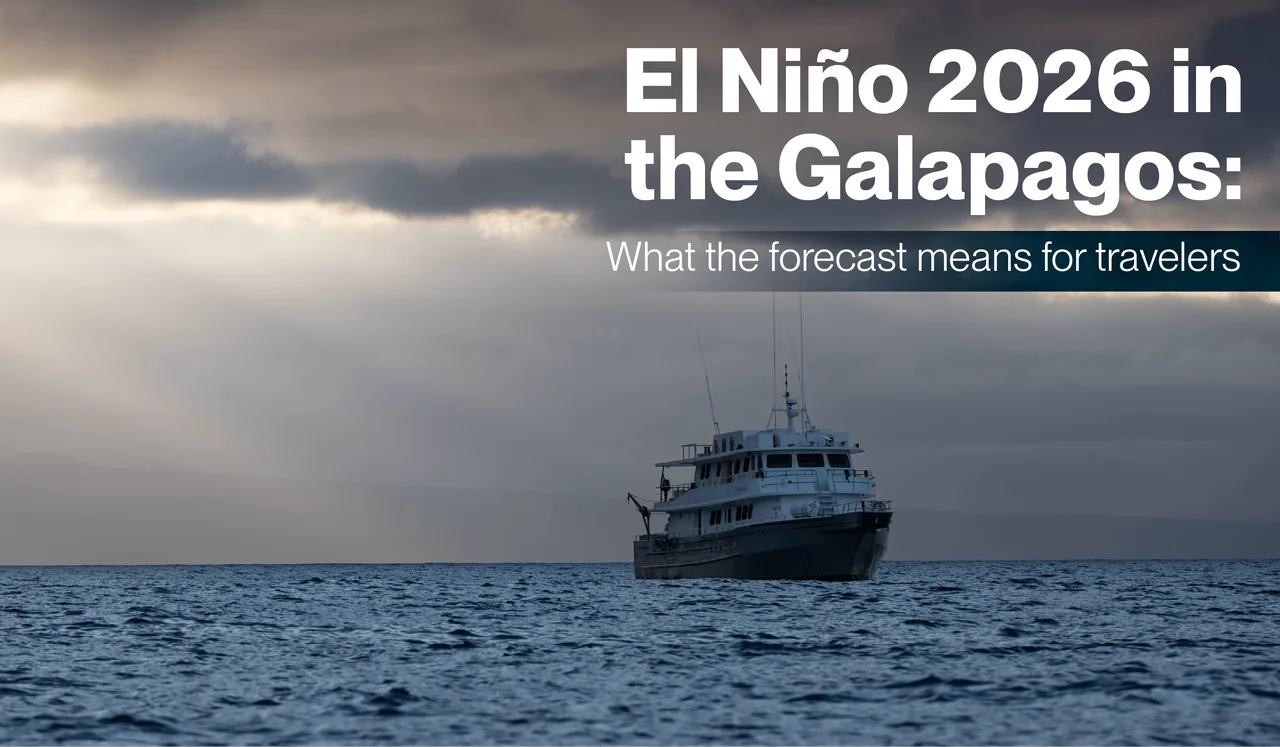
Every few years, waters around the Galapagos warm, rainfall increases, and the islands begin to change in ways you can see from a boat deck. 2026 may be one of those years—and current forecasts suggest it could be among the strongest El Niño events on record.
If you already have a Galapagos trip booked, or you’re considering planning one, you may be wondering what El Niño actually means for your experience.
Here’s what the El Niño 2026 forecast tells us so far—and, more importantly, what it could mean for your days exploring the islands, from weather and wildlife to sea conditions and what to pack.
El Niño 2026 in the Galapagos: The short version
El Niño is active, and NOAA expects it to be very strong this winter, possibly historic. In the Galapagos, that usually means warmer seas, more rain on land, greener islands, and harder year for marine wildlife like penguins and marine iguanas. The islands stay open, and trips go ahead.
How strong will El Niño be in 2026?
Very strong, according to the latest forecast. The NOAA Climate Prediction Center has had an El Niño Advisory in place since September 10, 2026, with sea surface temperatures in the key Niño-3.4 region already 1.8°C (3.2°F) above normal.
What NOAA expects next:
- More than a 90% chance of a very strong event during the Northern Hemisphere fall and winter of 2026–27.
- A 75% chance that it becomes historic—stronger than any El Niño since records began in 1950.
- Continued strengthening through the end of 2026.
Closer to the islands, Ecuadorian researchers quoted by Euronews expect the impact to last at least through February 2027. NOAA publishes a new update on the second Thursday of each month, and we’ll keep this page current.
What El Niño changes in the Galapagos
El Niño weakens the cold, nutrient-rich currents that feed the Galapagos. The water warms up, plankton and small fish become scarce, and the effect moves up the food chain—while on land, extra rain turns dry islands green.
Galapagos weather and rain during El Niño
The Galapagos normally has a warm, rainy season from December to May and a cool, dry one from June to November (our guide to the best time to visit the Galapagos Islands has the usual month-by-month picture). In a strong El Niño year, the warm season tends to bring heavier and more frequent rain, and the sea stays warmer for longer.
Sea temperature and conditions
Warmer water is the most noticeable change from a traveler’s point of view. Snorkeling is more comfortable, and the sea is often calmer with weaker currents. The trade-off is less marine life feeding near the surface, because the cold upwelling that brings nutrients is weaker.
Month by month: what to expect on your trip
This is a forecast, not a promise, but this is how a strong Galapagos El Niño typically plays out:
How does El Niño affect the Galapagos Islands’ wildlife?
Marine animals struggle, and some land animals thrive. Species that depend on cold, food-rich water—penguins, marine iguanas, sea lions, cormorants, and seabirds—have a harder year, while land iguanas and Darwin’s finches benefit from the extra plants that rain brings.
Who struggles with
- Galapagos penguins: the two strongest El Niño events on record, in 1982–83 and 1997–98, cut the population by 77% and 65%, according to research published by the University of Oxford. Penguins often stop breeding when food is scarce.
- Marine iguanas: as much as 70% of the population was lost in 1982–83, and they can shrink by up to 20% when algae run short, according to Galapagos Conservation Trust.
- Corals: The Charles Darwin Foundation notes that the 1982–83 event killed 97% of the islands’ reefs and expects corals to be among the biggest losers again.
- Sea lions, cormorants, and seabirds: less fish means fewer chicks and pups.
Who thrives on
- Land iguanas and Darwin’s finches benefit from the extra vegetation.
- The islands turn green, which is a striking sight on landings that are usually dry and brown.
- The downside: invasive plants also spread faster with the rain, which is why conservation teams are working on eradication and seed collection this year.
For where each species lives in a normal year, see our island-by-island wildlife guide.
Should I travel to the Galapagos during an El Niño year?
Yes, for most travelers. The islands stay open, the wildlife is still extraordinary, and you’ll see the Galapagos during an event scientists travel here to study. Go knowing that some marine species may be harder to find, and that rain and itineraries can change.
A few practical points:
- Expect some changes. Landings and routes can be adjusted for weather or wildlife conditions; our article on El Niño and expedition yacht travel explains how and why.
- Ask about change and cancellation policies before you book, in writing.
- Pack for rain and warm water: a light rain jacket and a thinner wetsuit layer—our Galapagos packing list has the details.
- Divers: El Niño changes conditions at Darwin and Wolf; we cover it in diving the Galapagos during El Niño.
- Snorkelers: warmer water means more time in the water comfortably; see our Galapagos snorkeling guide.
Small expedition yachts help in a year like this: with 12 to 16 guests, the naturalist guide can adjust the day around what’s actually happening at each site. And low-impact choices matter more when wildlife is under stress—EcoGalaxy, for example, was built with 50% less wood than a conventional vessel.
Plan with the forecast, not against it.
El Niño doesn’t close the Galapagos—it changes the story the islands tell for a season. Warmer water, greener landscapes, and wildlife adapting in real time make this a year worth seeing, as long as you travel with flexible expectations and good information.
Have questions about traveling this season? Talk to Galaxy Cruises, and we’ll tell you what we’re seeing on the water right now.
Frequently asked questions about El Niño in the Galapagos
Is El Niño happening in 2026?
Is El Niño happening in 2026? Yes. NOAA has had an El Niño Advisory in place since September 10, 2026, and expects it to strengthen through the end of the year.
When will El Niño peak?
NOAA expects the strongest conditions during the Northern Hemisphere fall and winter of 2026–27, roughly November to January.
Is it safe to visit the Galapagos during El Niño?
Yes. El Niño mainly changes the sea temperature, rain, and wildlife behavior. Operators adjust routes and landings when weather requires it.
Will I still see penguins and sea lions?
Usually yes, but in smaller numbers or in different places, since food is scarcer. Land wildlife like tortoises and land iguanas is unaffected or doing well.
Does El Niño make the Galapagos cheaper?
Not necessarily. Prices depend on the operator and the season; ask each operator directly.
How long will El Niño 2026 last?
Researchers expect the impact in the Galapagos to last at least through February 2027.
Sources: NOAA Climate Prediction Center · Charles Darwin Foundation · Galapagos Conservation Trust · Euronews · University of Oxford Research Archive. Last updated: October 6, 2026.
Samengesteld door Gvoya
Op zoek naar de juiste reis?
Bekijk aankomende afvaarten van Galaxy Cruises en vind de juiste route.
Bekijk reizen van Galaxy CruisesBron: galaxycruises.com