Diving the Galapagos during El Niño: water temperature, hammerheads, and whale sharks
Divers come to the Galapagos for cold, green, current-swept water full of big animals. El Niño changes that recipe: the water warms up, the currents ease, and the visibility often improves—but the food that draws hammerheads and whale sharks to the surface gets scarcer. With a very strong El Niño fo

Galaxy Cruises
October 8, 2026
Divers come to the Galapagos for cold, green, current-swept water full of big animals. El Niño changes that recipe: the water warms up, the currents ease, and the visibility often improves—but the food that draws hammerheads and whale sharks to the surface gets scarcer. With a very strong El Niño forecast for 2026–27, here’s what Galapagos El Niño diving realistically looks like at Darwin, Wolf, and the central islands.
Is it worth diving in the Galapagos during El Niño?
Yes, if you adjust your expectations. El Niño brings warmer water, calmer seas, and often clearer visibility, but fewer nutrients—so big schools and whale sharks can be less predictable. Hammerheads, sea lions, and other residents are still there; they may just be deeper or in different spots.
How El Niño changes Galapagos diving conditions: water temperature and currents
During an El Niño year, weaker trade winds and reduced upwelling keep Galapagos waters warmer than usual. As Divers Alert Network explains, warmer water can mean less thermal protection for divers—but it also means fewer nutrients are brought to the surface.
In a typical year, water temperatures in the Galápagos range from around 64°F (18°C) in August and September to 80°F (27°C) in February and March. If you’re planning your trip, our best time to visit the Galapagos Islands offers a month-by-month look at conditions throughout the year. NOAA Climate Prediction Center expects the current event to keep strengthening through the end of 2026, so the warm-water effect should be strongest from late 2026 into early 2027.
What can you expect underwater:
- More comfortable dives: Warmer water means you may need less thermal protection, making longer dives more comfortable for many divers.
- Easier surface conditions: Weaker currents and calmer seas on many days can make entries, exits, and drift dives more manageable.
- Potentially clearer water: With fewer nutrients in the water, there can be less plankton, which may improve visibility. That said, conditions can vary from day to day, so clearer water is never guaranteed.
- Less food for marine life: This is the trade-off. Reduced upwelling means fewer nutrients at the surface, which can affect the food chain and, in turn, the larger marine animals that depend on it.
For divers, El Niño can bring more comfortable water temperatures and, on some days, easier diving conditions. But the Galapagos is all about the incredible marine ecosystem—and warmer water can also change where and when you encounter some of its most iconic wildlife.
Will I see hammerheads at Darwin and Wolf during El Niño?
Very likely—but you may have to work a little harder to find them.
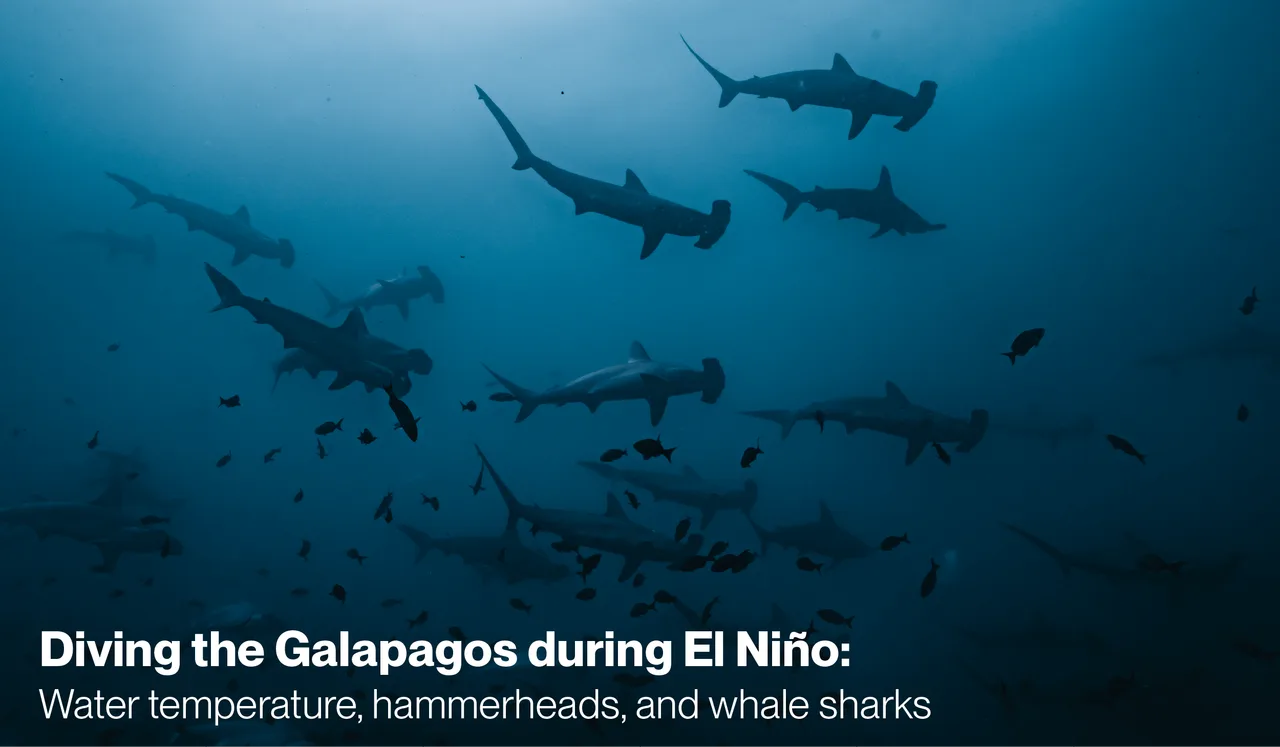
Scalloped hammerheads live around Darwin and Wolf year-round, so they remain one of the Galapagos’ iconic encounters even during El Niño. When surface waters warm, however, they tend to move deeper in search of cooler water. That means encounters may happen farther down the wall than they typically would during the cooler season.
What can improve your chances?
A few things can make a difference when you’re hoping to encounter scalloped hammerheads during an El Niño season:
- Time at Darwin and Wolf: The more dives you have at these sites, the better your chances. Our Galaxy Diver II and Galaxy Diver III itineraries include 19 dives, with 12 at Darwin and Wolf, giving you plenty of opportunities to look for hammerheads.
- Nitrox: When sharks are staying deeper, having more time at depth can make a real difference. Both yachts offer nitrox and dive with 12-liter tanks, helping you make the most of your bottom time.
- The dive briefing: Conditions can change quickly in the Galapagos. Our dive masters plan each dive around the conditions on the day and recent sightings, including where the sharks have been showing up that week. That local knowledge can be invaluable when looking for encounters with these remarkable animals.
Are there whale sharks in the Galapagos during El Niño?
Possibly—but whale sharks are less predictable during an El Niño year.
Whale sharks typically pass through Darwin and Wolf between June and November, when the cold Humboldt Current is at its strongest. During a warmer El Niño season, however, the nutrients and food they rely on can become less abundant, which may reduce the chances of an encounter.
So, if you’re diving the Galapagos during El Niño, think of a whale shark sighting as an incredible bonus rather than a guarantee. The possibility is still there—you just shouldn’t plan your trip around it.
What about the rest of the wildlife?
Not every species responds to El Niño in the same way. Sea lions, dolphins, and many reef fish remain part of the underwater experience, while species that rely on colder, nutrient-rich waters can be more affected.
- Sea lions and dolphins: You can still expect to encounter them on dives, although sea lion colonies can come under pressure when fish become harder to find.
- Marine iguanas: These unique reptiles feed on algae, which tends to grow less abundantly in warmer water. As a result, you may see fewer marine iguanas actively feeding underwater.
- Galapagos penguins: Because they depend on cold, nutrient-rich upwelling, penguins can struggle during strong El Niño events. For a broader look at how El Niño is affecting wildlife across the islands, see our El Niño 2026 in the Galapagos update.
- Corals: Prolonged periods of unusually warm water can put corals under stress and increase the risk of bleaching, particularly when temperatures remain elevated for several months.
What wetsuit do I need for Galapagos diving in an El Niño year?
Usually, a thinner wetsuit than you would need during a normal cool season. In typical Galapagos conditions, most divers wear a 5–7 mm wetsuit with a hood. During a strong El Niño year, many divers may be comfortable in a 3–5 mm wetsuit instead.
Conditions can still change from week to week, so we recommend checking with our dive team before your trip. They can give you the most up-to-date advice based on the conditions you’re likely to encounter.
El Niño Liveaboard Packing List:
- A 3–5 mm wetsuit, plus a hood or vest you can add if you encounter a colder thermocline.
- Reef-safe sunscreen and a rash guard for surface intervals, when the Galapagos sun can be intense.
- A surface marker buoy (SMB) and a personal locator. Both yachts carry SMBs and Nautilus Lifeline radios, and additional equipment is available to rent on board.
- A lightweight rain jacket for time on deck. El Niño can bring wetter conditions, so it’s worth having one within easy reach.
- Snorkeling gear, if you’re snorkeling rather than diving. The warmer water can be good news for snorkelers too. Our Galapagos snorkeling guide covers some of the best spots to explore.
If you’re snorkeling rather than diving, the warmer water is good news too. It can make time in the water even more comfortable, especially during longer snorkeling sessions. For inspiration on where to go, take a look at our Galapagos snorkeling guide, where we cover some of the best spots to explore.
Dive the season you get .
El Niño trades some predictability for warmer, and sometimes calmer and clearer, water. The big animals don’t disappear—they adapt, move, and follow the conditions. And when your liveaboard spends the majority of its dives at Darwin and Wolf, you have more opportunities to be in the right place when those encounters happen.
Want to know what our dive team is seeing right now? Get in touch with Galaxy Cruises before you book your liveaboard. Ask Galaxy Cruises. Our team can share the latest conditions and help you choose the itinerary that best matches what you want to experience underwater.
Frequently asked questions about Diving in the Galapagos during El Niño
Is the Galapagos diving season affected by El Niño in 2026?
Yes. Warmer water and weaker upwelling can affect visibility, currents, and where larger marine animals find food, with the effects potentially most noticeable from late 2026 into early 2027.
Is visibility better during El Niño?Often, but not always. With fewer nutrients in the water, there is usually less plankton, which can lead to better visibility. However, conditions can vary considerably from one dive site to another and from week to week.
Do hammerheads stay deeper during El Niño?They tend to move deeper in search of cooler water. This means you may encounter them farther down the wall, making dive planning and longer bottom times with nitrox particularly useful.
Should I cancel my Galapagos dive trip because of El Niño?Not necessarily. Hammerheads, sea lions, and plenty of reef life are still present, and warmer conditions can make some dives more comfortable. The best approach is to check with your dive operator about the conditions and wildlife activity they’re seeing during your trip.
What certification do I need to dive Darwin and Wolf?Darwin and Wolf are advanced dive sites, with strong currents possible even in normal years. Certification and experience requirements can vary, so check the specific requirements for Galaxy Diver II and Galaxy Diver III before booking your trip.
Sources: Divers Alert Network — Galápagos · NOAA Climate Prediction Center · Galaxy Diver II and Galaxy Diver III specifications from Galaxy Cruises.Last updated: October 6, 2026.
Samengesteld door Gvoya
Op zoek naar de juiste reis?
Bekijk aankomende afvaarten van Galaxy Cruises en vind de juiste route.
Bekijk reizen van Galaxy CruisesBron: galaxycruises.com